Gems ersätts av Färdigheter i Gemini – det här behöver du som lärare veta
Why Sweden’s new årskurs 1 must protect the strengths of förskoleklass
From autumn 2028, Sweden will introduce a ten-year compulsory school. Förskoleklass will cease to exist as a separate school form and will be replaced by a new first grade in grundskolan. Children will begin this new årskurs 1 in the year they turn six.
This is more than an administrative change. It is a significant moment for Swedish schools because it asks leaders and teachers to think carefully about what high-quality learning should look like for six-year-olds when their first year becomes a recognised part of the ten-year school program.
Some greater formalisation is inevitable, and perhaps necessary. Curriculum expectations will become clearer. Progression through the early years will require greater coherence. Schools will need stronger shared understandings about what children are learning, how teachers notice that learning and how they respond when children need additional support or greater challenge. What does not necessarily follow is that the experience of school should become more formal for the child.
This distinction is important to me. The professional work around learning can become more deliberate and more formalised without the child’s experience of learning becoming more formal. The danger in the 2028 reform is not that Sweden is creating a new årskurs 1. The danger is that more academic, more clearly defined or more accountable becomes interpreted as more sitting, more worksheets, more testing and less play, movement, talk and exploration.
There is another way to respond to the reform. We can strengthen the professional responsibility surrounding early learning while protecting the ways six-year-olds learn best. Rather than making schooling more formal for the child, we can make learning more visible for the adults responsible for supporting it.
The phrase more visible learning needs some explanation because I am not using it as a slogan. I mean something quite practical. Children should increasingly understand what they are learning and what they are trying to achieve. Teachers should become increasingly able to notice learning while it is taking shape: what a child understands, where thinking is developing, where misconceptions or uncertainty are beginning to emerge, and what support or challenge may be needed next. Teams should then be able to discuss that learning with enough precision to improve what happens next.
Making learning more visible does not mean making young children more measurable. It is not an argument for more testing, more documentation or more formal assessment. In fact, much of the most important learning at this age will continue to become visible through play, conversation, drawing, building, movement, storytelling, counting, questioning and interaction.
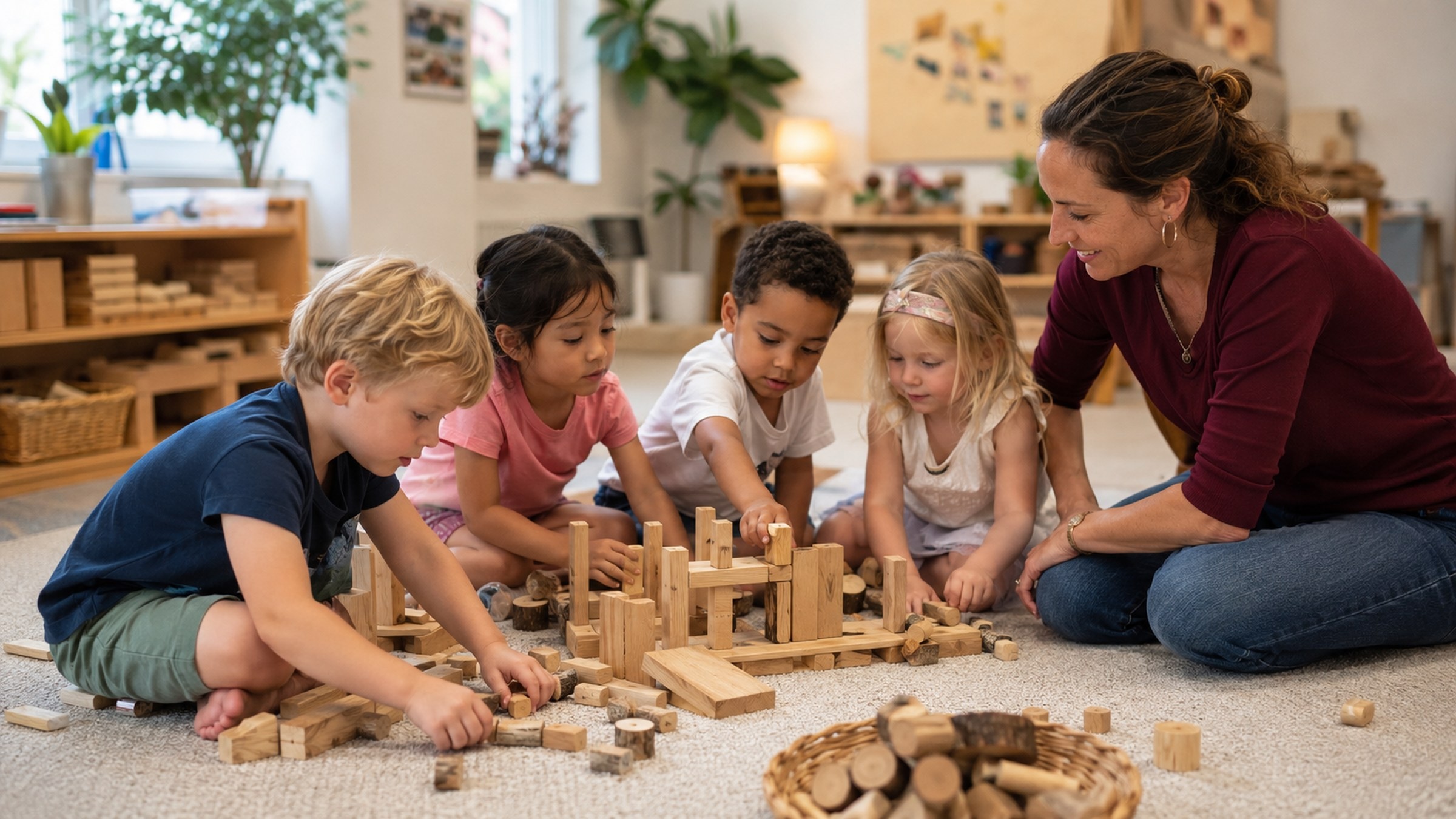
The professional challenge of this reform is to become better at seeing the learning within those experiences. A child constructing a tower may be demonstrating mathematical reasoning. A conversation during imaginary play may reveal important developments in vocabulary, oral language or social understanding. A child retelling a story may show growing awareness of sequence and narrative. Another child may demonstrate increasing independence simply by returning to a task after becoming distracted. None of these moments requires the child to sit a test before learning can become visible. They require an adult who knows what to notice and understands what that observation might mean for teaching.
That is the distinction I want to preserve throughout this discussion. The task is not to make children more visible to the system. It is to make learning visible enough to the adults around them that they can respond well.
Here are 4 key takeaways
- The new årskurs 1 should not mean more formal schooling for six-year-olds. Schools can strengthen curriculum, planning and professional responsibility while still protecting play, movement, talk, and exploration.
- More visible learning means becoming better at noticing learning while it is happening. Teachers need to see what children understand, where they are struggling and what they may need next without turning this into more testing or documentation.
- Play and deliberate teaching are not opposites. Learning can remain playful for children while teachers become clearer about the purpose of the activity, what they are looking for and how they will respond.
- The next two years are also a learning period for leaders. Principals and assistant principals do not need to begin as early-years experts, but by 2028 they should know enough to recognise, discuss, support, and protect high-quality learning for six-year-olds.
I come to this discussion not only through my current work in Swedish schools. Earlier in my career, I spent many years teaching Preparatory Class in Victoria, Australia. Prep is the first year of formal schooling, and the children are the same age as those who will enter Sweden’s new årskurs 1.
In the years since, I have also worked as a school leader and at system level, including as an avdelningschef. That has allowed me to experience this question from more than one position: first as a teacher responsible for creating the learning experience for six-year-olds, and later as a leader responsible for creating the conditions in which teachers could do that work well. Those perspectives have shaped how I now think about this reform. Quality cannot depend only on the skill and judgement of individual teachers. Leaders also need to understand enough about high-quality early learning to recognise it, support it and help it develop across a school.
My years teaching Prep shaped much of my thinking about young children and schooling. I experienced the tension Sweden is now beginning to consider: how to introduce children to the expectations and rhythms of school without losing play, curiosity, movement and talk; how to teach early literacy and mathematics deliberately without making learning unnecessarily formal; and how to recognise when a child needs more time, another explanation, additional practice or greater challenge.
Of course, Australia is not Sweden, and I would never suggest simply transferring one system into another. Förskoleklass has important strengths that deserve to be protected. My experience did, however, leave me convinced of something I continue to believe today: six-year-olds can thrive within a school structure when that structure respects how six-year-olds learn.
That is why I do not see the central question as how to make förskoleklass more like school. The more useful question is how schools can become increasingly deliberate about learning without losing the practices that already allow young children to learn well.
The real work of the reform will not sit only in curriculum documents, schedules or transition plans. These things matter, and the move into a ten-year compulsory school will rightly require schools to think carefully about them. But they are not the centre of the work.
The centre of the work remains how young children learn, how teachers notice that learning and how teaching responds. Learning does not happen to children simply because adults have planned an activity. It develops through interaction, attention, modelling, feedback, practice, language and meaning. That distinction matters because the new årskurs 1 must not become a delivery model in which more content is simply pushed earlier.
Six-year-olds need teaching, and at times that teaching should be clear, explicit and highly deliberate. But they also need teaching that fits how they learn. They need opportunities to move, talk, play, explore, practise and interact. They need adults who understand the purpose of the learning while remaining attentive enough to notice what children are doing with it.
This is where the existing strengths of förskoleklass matter so much. Play, talk, movement, exploration and relationships are not practices that should automatically be left behind as children move into a more formally recognised year of schooling. They provide important conditions through which early learning develops. The opportunity created by this reform is not to replace those practices. It is to become clearer about the learning within them.
One of the least helpful debates in early learning is the assumption that schools must choose between play and teaching. Play-based learning does not mean leaving learning to chance, just as explicit teaching does not require the removal of curiosity, imagination or movement.
High-quality teaching for young children sits somewhere in the relationship between the two. A teacher might design an experience in which children build towers, sort objects, create patterns, retell a story or take roles in an imaginary setting. To the children, the experience may feel playful and exploratory. To the teacher, it can simultaneously provide opportunities to notice language, reasoning, counting, vocabulary, turn-taking, attention, confidence and conceptual understanding.
The activity can remain playful while the teacher’s thinking becomes increasingly precise.
This is where I think greater professional formalisation can strengthen rather than diminish förskoleklass. Teachers should become clearer about why an experience has been designed, what learning it is intended to support, what they are looking and listening for, and what they might do in response to what they notice. The teaching can become more deliberate without the learning becoming more formal.
Clarity does not require every child to do the same thing, in the same way, at the same time. It means the adults understand the learning purpose and can make considered decisions about why this activity, why this grouping, why this question, why this support and why this next step.
For me, this is also an equity issue. Children cannot be supported well when the intended learning remains vague for the adults. If we are unclear about what children are developing, it becomes much harder to recognise who needs additional support, who is ready to move further and who may be participating successfully in the activity without yet developing the intended learning.
The new årskurs 1 therefore creates an opportunity for schools to become more explicit about what good looks like in early literacy, early mathematics, oral language, play-based learning, small-group teaching, routines, independence and collaboration. That does not require every classroom to look identical. Professional judgement remains essential. What it does mean is that the quality of a child’s learning should not depend entirely on which classroom they happen to enter.
In the Swedish context, the language we use around assessment matters. When people hear the word assessment, it can quickly evoke testing, judgement and documentation. That is not what I am arguing for. I prefer to think about this as formative teaching.
Formative teaching means teaching in ways that allow teachers to see learning while it is happening and to respond before the learning opportunity has passed. Teachers listen, observe, question, model, adjust and provide support as learning develops rather than waiting until the end of a theme, unit or term to discover who understood.
In early-years classrooms, that evidence will often be found in ordinary classroom experiences. It might be visible in a conversation, during a small-group activity, at a station, in a play episode, through an oral explanation, drawing, counting, sorting or retelling. The purpose is not to collect evidence for its own sake. The purpose is to improve the next teaching decision.
This is not a criticism of current förskoleklass practice. In many classrooms, teachers are already noticing children carefully and responding with considerable professional skill. The opportunity created by the reform is to make some of this noticing more intentional, more shared and easier to discuss across teams.
When teachers can talk together about what they are noticing, what it suggests about children’s learning and what they might need to do next, professional learning becomes closely connected to the children in front of them. A teacher may decide that something needs to be modelled again, practised in a different way, extended for some children or supported more deliberately for others. This is what I mean when I describe learning as becoming more visible. Visibility matters because it gives adults the opportunity to act while their actions can still influence the learning.
Station learning is one example of a classroom structure that can support this work, although its value depends entirely upon how it is used.
Stations are not powerful simply because children move from one activity to another. They become useful when they create conditions in which a teacher can work closely with a smaller group while other children engage in meaningful, manageable and purposeful learning. The teacher-led station can become a place for modelling, prompting, questioning, listening and noticing. Independent stations provide children with opportunities to practise, apply and build confidence. At the same time, they reveal something about whether routines and expectations are sufficiently clear for children to work without continual adult intervention.
This matters because independence does not appear simply because children have been placed at an independent station. Collaboration does not appear because children are sitting beside one another. Listening, turn-taking, using materials, remaining with a task, asking for help and returning to learning are capabilities that develop through teaching and practice.
When stations are designed mainly around activities, they can easily become a classroom-management structure. When they are designed around learning, they can create valuable opportunities for formative teaching.
The planning question therefore changes. Rather than beginning with what activities children will complete, teachers begin by considering what learning they are trying to make visible and what children will need to participate successfully. That is a subtle difference in planning, but an important one.
The same caution applies when schools begin bringing evidence of learning together. As the new årskurs 1 develops, schools will understandably need better ways of following children’s learning over time. Shared evidence tools, including data walls in some settings, can help teachers identify patterns and decide where further teaching, support or challenge is needed.
But greater professional rigour must never become a mechanism for labelling young children. A learning visibility wall should not become a place where children are ranked, colour-coded into fixed categories or described primarily through deficits. Its value lies in helping teachers move from general impressions towards more precise professional decisions.
There is an important difference between saying that a child is “weak in mathematics” and noticing that the child can recite number words but is not yet consistently demonstrating one-to-one correspondence when counting objects. There is a difference between saying that a child is “not ready for reading” and identifying a need to strengthen oral language, vocabulary or sound awareness. There is also a difference between deciding that a child “lacks independence” and recognising that the routines required for successful independent learning may not yet have been explicitly taught.
The stronger the evidence becomes; the less useful broad labels should become.
That is the professional purpose of visibility. It helps adults understand more clearly what is happening so that the next response becomes more thoughtful and deliberate.
For principals and assistant principals, the 2028 reform is not only a structural change. It is a learning challenge. Principals do not need to begin as experts in early-years pedagogy. Few will. But there is an important difference between not beginning as an expert and remaining outside the learning.
There are still two years before the reform takes effect. That is not a long time in school improvement, but it is long enough for leaders to develop a much stronger understanding of high-quality learning for six-year-olds. By 2028, principals and assistant principals should understand enough to recognise quality, discuss it with teachers, support its development and protect the conditions that allow it to flourish.
That will require more than organising the transition. Leaders will need to become participants in the professional learning surrounding it. They will need opportunities to spend time with teachers, observe learning, listen to professional dialogue, examine examples of practice and gradually strengthen their own understanding of what quality looks like.
A question I think leaders should begin asking now is: What do I need to learn so that I can recognise, support and protect high-quality learning for six-year-olds?
That question changes the nature of preparation. Leaders will need to think about schedules, staffing, rooms, materials and curriculum organisation, but they will also need to become increasingly confident discussing what high-quality play-based learning looks like, how early literacy and mathematics can be taught deliberately without unnecessary formalisation, what teachers are noticing during play and small-group teaching, and where strong practice already exists within the school.
This brings leadership closer to learning without turning the principal into an inspector of classrooms or an expert in every early-years method. You do not need to begin as the expert, but you cannot stand outside the learning.
The reform will create pressure, and that is unavoidable. What interests me more is what Swedish schools choose to do with the time between now and 2028.
If the reform is interpreted poorly, it could lead to premature formalisation. Six-year-olds could experience schooling that increasingly resembles the years above simply because their year level now formally sits within grundskolan.
If it is interpreted well, something quite different is possible. The professional responsibility surrounding this first year can become stronger. Curriculum progression can become clearer. Teachers can become more deliberate about what they are teaching and more precise about what they are noticing. Teams can develop stronger shared understandings of quality, and leaders can build the knowledge they need to recognise and protect excellent early-years practice.
All of that can occur while the experience of learning for children remains rich in play, movement, talk, exploration and relationships.
Perhaps that is the opportunity we should hold onto as the reform approaches. The next two years can become a period of deliberate professional learning in which schools protect what is strongest in förskoleklass while becoming clearer about what high-quality learning for six-year-olds looks like.
Teachers will need to learn together, and leaders will need to learn alongside them. Over time, schools can move beyond assuming that everyone holds the same understanding of quality and begin developing an understanding that is shared, discussable and continually refined.
The goal is not uniformity. It is greater professional clarity about the quality every child should be able to experience, regardless of which classroom they enter.
In that sense, the reform may require us to formalise the professional responsibility surrounding early learning without unnecessarily formalising the learning experience itself.
That is what I mean by more visible learning, not more formal schooling.